02 / 05
LeadFlow
- Role
- Founder and engineer
- Company
- TechDevX
- Year
- 2026 – now
- Built with
- Next.js, Fastify, TypeScript, PostgreSQL, Prisma, Redis, BullMQ, Claude API, and WhatsApp Cloud API
Overview
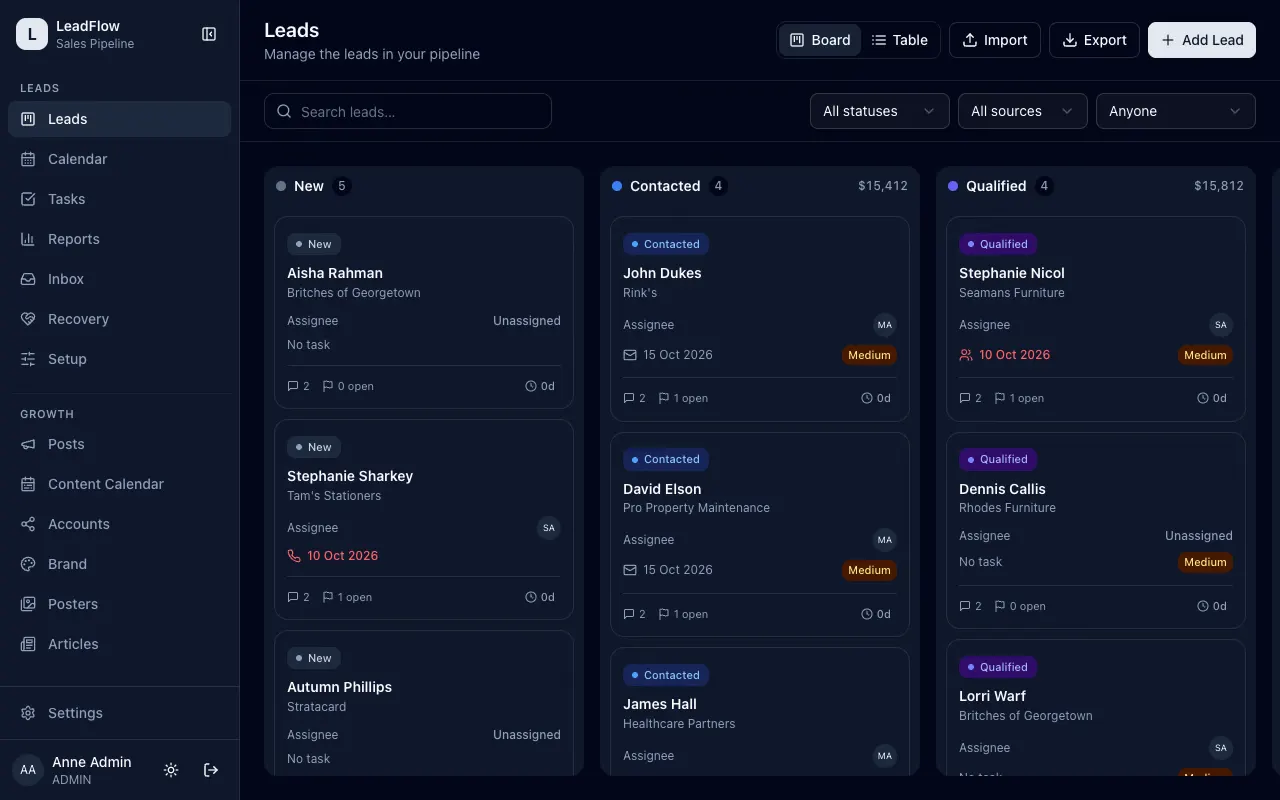
LeadFlow is TechDevX’s own product: a CRM for small sales teams. Leads arrive from a website widget, an API or WhatsApp, and each one gets an owner, a stage and a full history. On WhatsApp, an AI agent answers enquiries day and night using the business’s own playbooks, and staff can take over a conversation at any time. Many businesses run on one install, each kept fully separate.
What I did
- 01Designed and built the product end to end, from data model to deploys
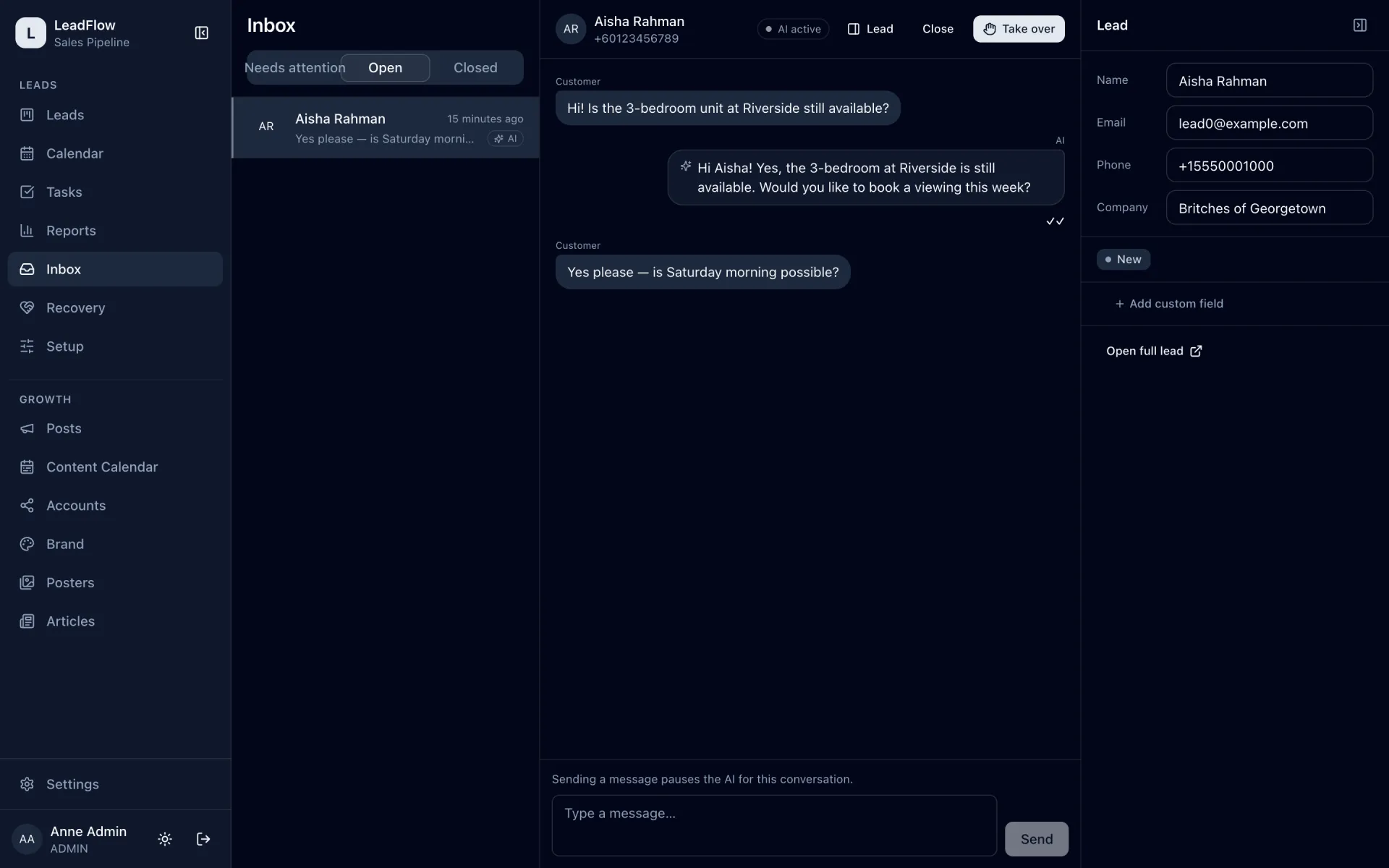
- 02Built the WhatsApp AI agent: playbooks, a daily cost cap, and replies dropped if they fail validation
- 03Made it multi-tenant, with every database query scoped to its business
- 04Set up CI/CD: lint, types, API tests against a real Postgres, container builds and automated deploys
A pipeline people actually use
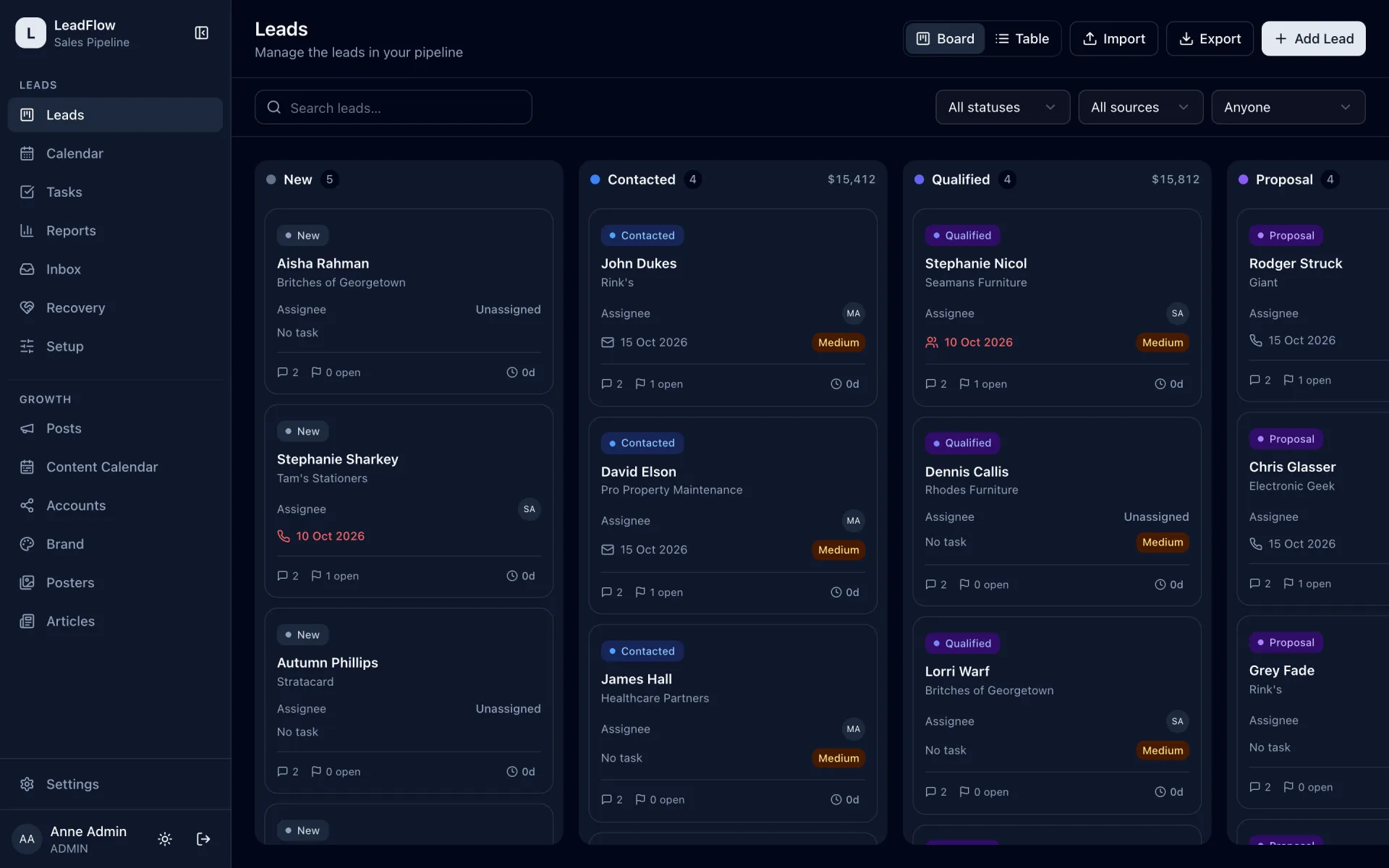
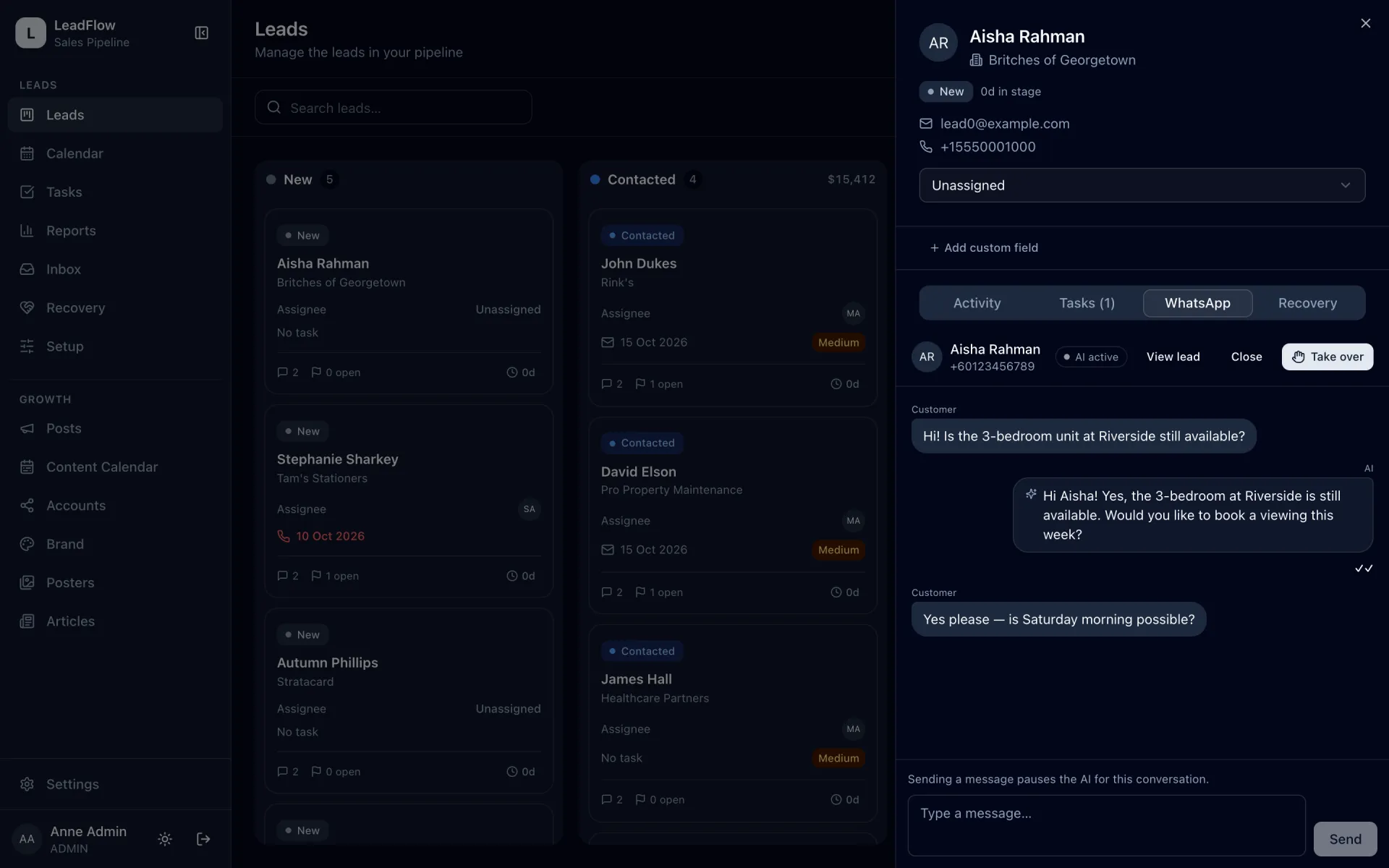
A drag-and-drop board and a sortable lead table, with filters saved in the URL and bulk stage moves. Each lead opens into a panel with an activity history that can’t be edited, notes, tasks, custom fields and its WhatsApp thread. Duplicate detection, CSV import and export, and reports on where leads come from are built in.
An AI agent that knows when to stop
Incoming WhatsApp messages become leads and conversations. The agent replies using playbooks the business sets, within a daily spending cap, and any reply that fails validation is dropped rather than sent. A message from staff pauses the AI for that conversation. It runs on Claude by default, with OpenAI switchable.
Leads from anywhere
Each business gets API keys and an embeddable widget for its own site, plus web-to-lead forms. The TechDevX studio site’s own contact form feeds straight into LeadFlow.
Built to run
A Turborepo monorepo with Next.js apps, a Fastify API and background workers on Redis queues, all on Postgres with every query scoped to its business. Every push to main runs lint, type checks and API tests against a real Postgres, then builds containers and deploys them to DigitalOcean.
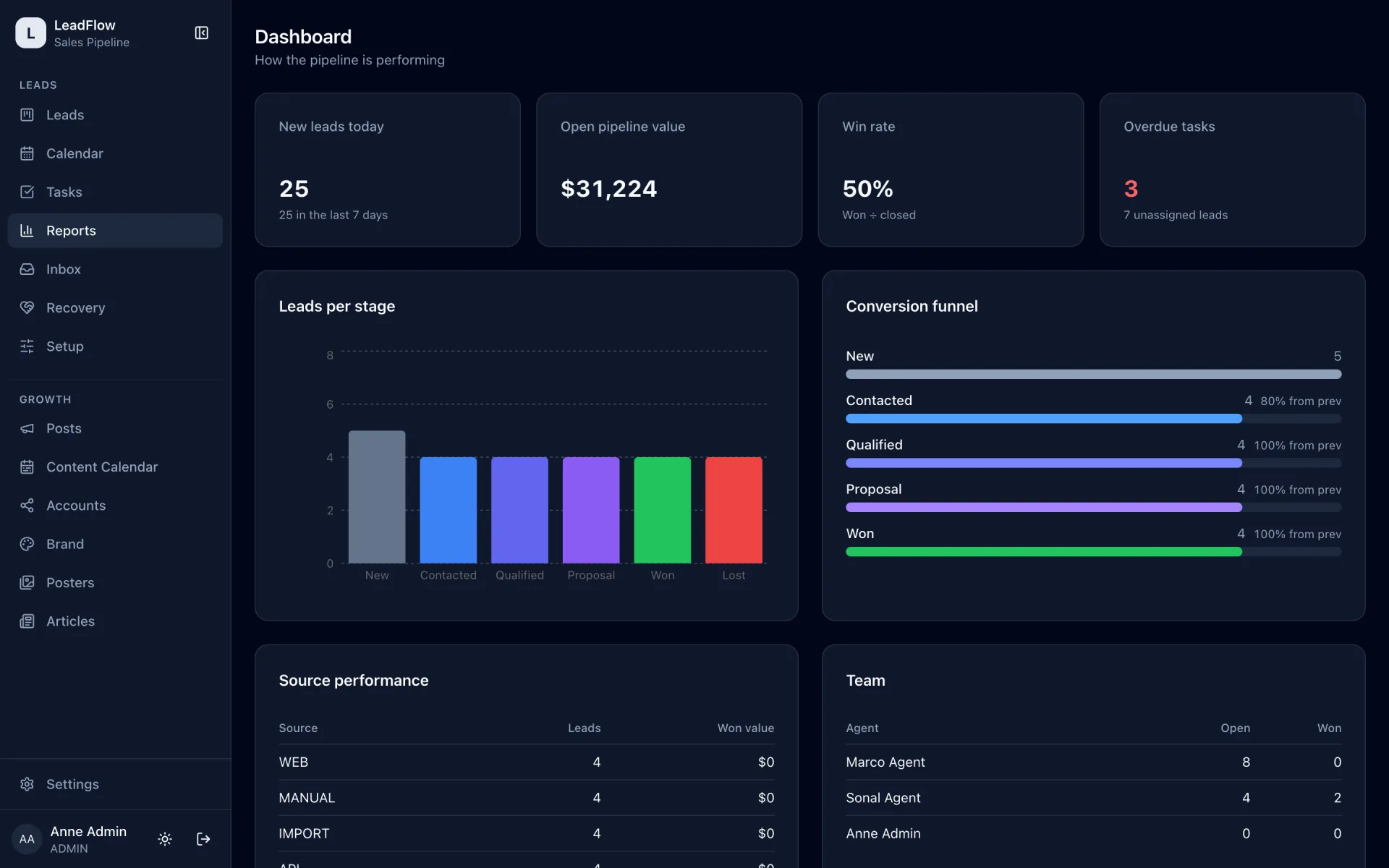
Product names and imagery belong to TechDevX.